
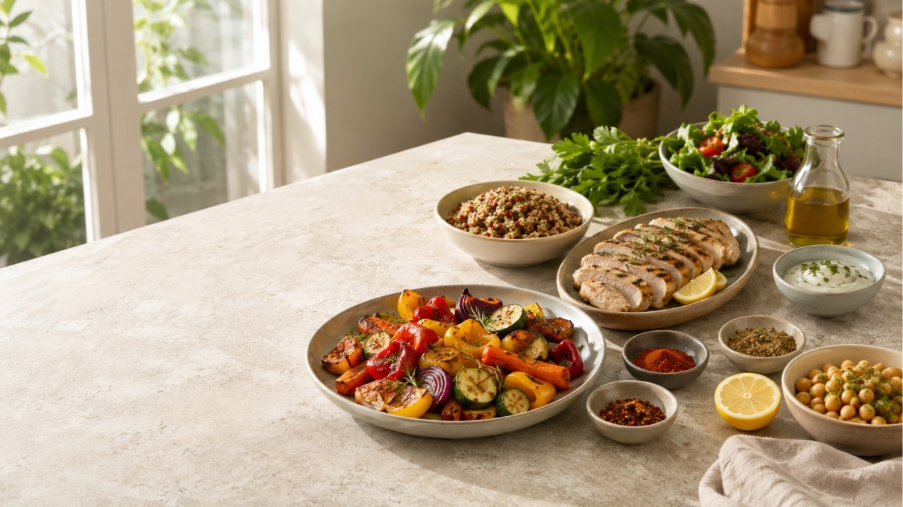
Healthy eating is often presented as a list of foods you should eat more of and foods you should avoid. While choosing nutritious ingredients is important, there is another part of healthy eating that deserves just as much attention: whether you actually enjoy the food on your plate.
A meal can be packed with vegetables, whole grains and quality sources of protein, but if it is bland, repetitive or unsatisfying, maintaining healthy eating habits can become difficult. Food is not simply fuel. Taste, texture, aroma and variety all influence how enjoyable a meal feels.
The good news is that nutritious food does not need to be boring. A few simple cooking techniques and flavour-building ingredients can transform everyday meals without requiring complicated recipes.
Start With Flavour, Not Restriction
One of the easiest ways to make healthier eating more enjoyable is to stop thinking only about what needs to be removed from a meal.
Instead of asking, “What shouldn’t I eat?”, consider asking, “How can I make this meal more satisfying?”
A simple bowl of vegetables can become much more appealing with a squeeze of lemon, freshly chopped herbs, toasted seeds or a spoonful of a flavourful dressing. Plain rice can be paired with vegetables, herbs and spices to create a completely different meal. Grilled chicken or fish can be transformed with a marinade rather than relying on heavy sauces.
This approach changes healthy eating from a list of restrictions into an opportunity to experiment.
Herbs and Spices Can Transform Simple Ingredients
Herbs and spices are among the easiest ways to add character to nutritious meals.
Fresh herbs such as parsley, coriander, mint and basil can bring freshness to salads, grains and cooked vegetables. Dried spices such as cumin, paprika, turmeric, cinnamon and coriander can add warmth and depth to everything from soups to roasted vegetables.
Different cuisines can also provide inspiration.
Mediterranean-style meals might combine herbs, lemon and olive oil. South Asian cooking frequently builds layers of flavour through combinations of spices. Turkish and Middle Eastern dishes often use fresh herbs, citrus, spices and contrasting textures to make relatively simple ingredients much more interesting.
For more ideas and inspiration, check out the variety of recipes and ingredients, including Turkish, South Asian, and world-food recipes.
The point isn’t to follow one particular cuisine. It is to discover how different combinations of ingredients can make nutritious foods more exciting.
Don’t Forget Texture
Taste isn’t the only thing that makes food enjoyable. Texture can make a surprisingly big difference.
A meal consisting entirely of soft or steamed ingredients can feel less satisfying than one containing a mixture of textures.
Try combining:
- Crisp vegetables with creamy hummus
- Crunchy nuts or seeds with a soft grain bowl
- Fresh salad with roasted vegetables
- Creamy yoghurt with fresh fruit
- Crisp roasted chickpeas with soup
- Tender fish with crunchy vegetables
Even a simple salad can become much more appealing when it includes contrasting textures.
Texture also gives you another way to experiment without substantially changing the nutritional foundation of a meal.
Use Acidity to Brighten Food
Lemon juice, lime juice, vinegar and other acidic ingredients can make food taste fresher and more vibrant.
This can be particularly useful when a meal seems flat or lacks contrast.
A squeeze of lemon can lift roasted vegetables. A splash of vinegar can give a bean salad more character. A little citrus can balance the richness of avocado or olive oil.
You don’t necessarily need a complicated dressing. Sometimes a few simple ingredients are enough to change the overall character of a dish.
Learn to Roast Your Vegetables
How you cook an ingredient can be just as important as which ingredient you choose.
Boiled vegetables can be perfectly nutritious, but roasting can create a completely different eating experience. The dry heat encourages browning and gives vegetables more developed flavours and appealing textures.
Try roasting ingredients such as:
- Carrots
- Cauliflower
- Broccoli
- Peppers
- Courgettes
- Sweet potatoes
- Onions
- Aubergine
Season them before cooking with herbs, spices, black pepper or a small amount of oil, then experiment with different combinations.
The same vegetable can taste remarkably different depending on how it is prepared.
Make Healthy Meals More Colourful
Colour isn’t a guarantee that a meal is nutritious, but a colourful plate can encourage greater variety.
Instead of building meals around one or two ingredients, try including several different vegetables, fruits, herbs or grains throughout the week.
For example, a simple grain bowl could contain roasted peppers, spinach, cucumber, tomatoes, chickpeas, fresh herbs and a lemon-based dressing.
This approach doesn’t require buying expensive “superfoods”. Ordinary ingredients can create colourful, varied meals when combined thoughtfully.
Explore Different Cuisines
Eating the same meals repeatedly can make even a healthy diet feel monotonous.
One way to solve this is to explore different culinary traditions.
You might make a Mediterranean-inspired lunch one day, try a South Asian dish later in the week and experiment with Turkish flavours at the weekend.
The ingredients don’t have to be exotic or difficult to find. Sometimes simply changing the seasoning, cooking method or combination of ingredients can make familiar foods feel completely different.
Exploring different cuisines can also make healthy eating feel like a hobby rather than a chore.
Don’t Try to Change Everything at Once
A common mistake is attempting to completely overhaul your diet overnight.
That can create unnecessary pressure and make healthy eating feel like a temporary challenge rather than a sustainable lifestyle.
Instead, make small improvements.
If you normally eat plain vegetables, try adding a new herb or spice. If you usually prepare the same protein, experiment with a different marinade. If breakfast is repetitive, introduce a different fruit, whole grain or yoghurt combination.
Small changes can gradually increase variety without making meal preparation overwhelming.
Build a Personal Flavour Toolkit
You don’t need a cupboard full of ingredients to make meals more interesting.
A basic flavour toolkit might include:
- Extra virgin olive oil
- Lemons or limes
- Garlic
- Fresh herbs
- Black pepper
- Paprika
- Cumin
- Chilli flakes
- Cinnamon
- Vinegar
- Natural yoghurt
With these ingredients available, a basic meal can be adapted in numerous ways.
The key is to experiment. You may discover that you prefer smoky flavours, fresh herbs, spicy foods, citrus-based dressings or warm spices. Once you understand your own preferences, it becomes easier to prepare nutritious meals that you genuinely look forward to eating.
Enjoyment Is Part of Sustainable Healthy Eating
Healthy eating doesn’t have to mean choosing between nutrition and enjoyment.
In fact, making nutritious food more appealing may help healthy habits feel more sustainable. When meals are varied, flavourful and satisfying, there is less reason to view healthier eating as a punishment or temporary diet.
That doesn’t mean every meal needs to be perfect. There is room for favourite foods, treats and spontaneous meals as part of an overall balanced approach.
The goal is simply to build a way of eating that provides good nutrition while remaining enjoyable enough to maintain.
So, the next time a healthy meal seems boring, don’t immediately assume you need a completely different diet. Try changing the flavour, texture, colour or cooking method first.
A little creativity in the kitchen can make nutritious food something you actually look forward to.