Choosing what to wear for exercise can seem like a minor decision, but the right clothing can make a workout considerably more comfortable.
A pair of clothes that works well for a relaxed walk may not be the best choice for a high-intensity workout. Similarly, clothing that feels comfortable during strength training may not provide the freedom of movement needed for other activities.
The goal isn’t necessarily to own a separate wardrobe for every type of exercise. Instead, understanding the basic requirements of different activities can help you choose clothing that allows you to move comfortably and concentrate on your workout.
Why Workout Clothing Matters
Exercise involves movement, changes in body temperature and, often, perspiration. Clothing that doesn’t suit the activity can become distracting.
A poorly fitting top may need constant adjustment. Heavy fabric can become uncomfortable as your body warms up. Clothing that restricts movement can make certain exercises more difficult to perform comfortably.
Good workout clothing should generally allow you to move freely while helping you remain comfortable throughout the activity.
That doesn’t mean expensive specialist clothing is essential. For many forms of exercise, a few well-chosen basics are enough.
Running: Think Lightweight and Comfortable
Running creates repetitive movement and can quickly increase body temperature, so comfort is particularly important.
Look for clothing that allows unrestricted movement without feeling excessively heavy. Breathable fabrics can help manage moisture, while comfortable running trousers, loose-fitting athletic bottoms or other suitably covering options can help you move without unnecessary distractions.
Socks deserve attention too. An uncomfortable pair can cause rubbing or hot spots during a longer run.
For outdoor running, your clothing should also reflect the weather. In colder conditions, wearing several lighter layers can give you more flexibility than relying on one heavy garment.
On warmer days, lightweight and breathable layers can help you feel more comfortable as your body heats up.
Strength Training: Prioritise Freedom of Movement
Strength training involves a wide range of movements, from squats and lunges to presses, rows and deadlifts.
Your clothing shouldn’t prevent you from moving through a comfortable range of motion.
Choose bottoms that allow your legs to bend and move without feeling restrictive. Your top should also allow your shoulders and arms to move freely while providing the coverage you are comfortable with.
Avoid clothing that is excessively loose if it could interfere with your movements or equipment. At the same time, extremely tight clothing isn’t automatically better.
The best option is generally something that stays comfortably in place, provides suitable coverage and allows you to concentrate on your technique.
Indoor Cycling: Focus on Comfort and Support
Indoor cycling is a low-impact activity but can still raise your heart rate and body temperature, particularly during longer or more intense sessions.
Look for clothing that is breathable and allows you to pedal comfortably without restricting movement.
Padded cycling shorts can improve comfort during longer sessions. Those who prefer more coverage can layer them beneath longer, loose-fitting sportswear. A comfortable top can also help reduce distractions while you exercise.
Indoor cycling classes can vary considerably in intensity. Layering with a lightweight outer layer that you can adjust if needed can be a practical choice.
HIIT: Prepare for Heat and Movement
High-intensity interval training can involve repeated bursts of demanding activity, often with short recovery periods.
As a result, you may become hot and sweaty relatively quickly.
Lightweight, breathable clothing can therefore be useful. Your outfit should also allow you to perform movements such as jumping, squatting, running and lunging without restriction.
Clothing that stays securely in place can be particularly helpful during exercises involving lots of movement, while still allowing for a comfortable and modest fit.
You don’t necessarily need highly specialised HIIT clothing. A comfortable top and bottoms that provide suitable coverage while allowing plenty of movement may be perfectly adequate.
Walking: Comfort Comes First
Walking is one of the simplest ways to stay active, and clothing doesn’t need to be complicated.
For short walks in mild weather, comfortable everyday clothing may be all you need.
Longer walks require a little more consideration. Comfortable footwear becomes increasingly important as distance increases, while lightweight layers can make it easier to adapt to changing temperatures.
If you’re walking outdoors in unpredictable weather, consider clothing that can handle wind or light rain.
The best walking outfit is often the one you barely notice while you’re wearing it.
Outdoor Exercise: Dress for the Conditions
Exercising outdoors introduces another variable: the environment.
Temperature, wind, rain and sunlight can all influence what you should wear.
Rather than choosing one outfit for every season, think in terms of layers.
A base layer can sit close to the skin, while additional layers can be added or removed depending on conditions. For those who prefer more coverage, longer outer layers can provide additional coverage without making movement unnecessarily difficult.
In warm weather, breathable and lightweight clothing can make outdoor exercise more comfortable. In colder weather, several adaptable layers may be more useful.
Don’t forget that conditions can change during a workout. A cool morning may become considerably warmer after an hour of walking or running.
Modesty and Workout Clothing
For those who prefer modest sportswear, the same principles of comfort and freedom of movement can be applied while choosing clothing that provides appropriate coverage.
Loose-fitting trousers, longer tops, lightweight layers and breathable fabrics can work well for exercise without unnecessarily restricting movement. It can also be useful to check how clothing behaves during stretching, bending, squatting and other movements rather than judging coverage while standing still.
The aim is to find practical clothing that supports your workout while fitting your personal requirements and values.
Gym Classes: Keep It Simple
Many gym classes combine different types of movement, so versatile clothing is often the most practical option.
If a class involves cardio, resistance exercises and stretching, choose clothing that can comfortably handle all three while providing the level of coverage you prefer.
A supportive sports bra can provide useful comfort during activities involving running or jumping and can be worn beneath suitable sportswear where additional support is needed.
Again, the objective is comfort and freedom of movement rather than following a particular fashion trend.
Fit Matters More Than Trends
Workout clothing trends change constantly, but the basic principles of good fit remain relatively consistent.
Clothing shouldn’t be so tight that it restricts comfortable movement, nor so loose that it repeatedly gets in the way.
When trying something on, move around in it.
Squat, stretch, raise your arms and walk around. Clothing that feels fine while standing still may feel very different once you start exercising.
Pay attention to waistbands, seams, straps and areas that could rub against the skin. Also consider whether the clothing continues to provide the coverage you want when you move.
A good fit is ultimately personal. Two people can prefer completely different styles while both choosing perfectly suitable exercise clothing.
Don’t Confuse Expensive with Better
There is a huge range of sportswear available at different prices.
While technical fabrics and specialist designs can be useful for certain activities, you don’t necessarily need premium clothing to exercise effectively.
Someone starting a walking programme, for example, doesn’t need a complete collection of specialist athletic clothing.
Likewise, someone beginning basic strength training can often start with a few comfortable pieces they already own.
As your activity develops, you can identify which features actually make a difference to you and invest accordingly.
Create a Small Workout Wardrobe
You don’t need dozens of different outfits.
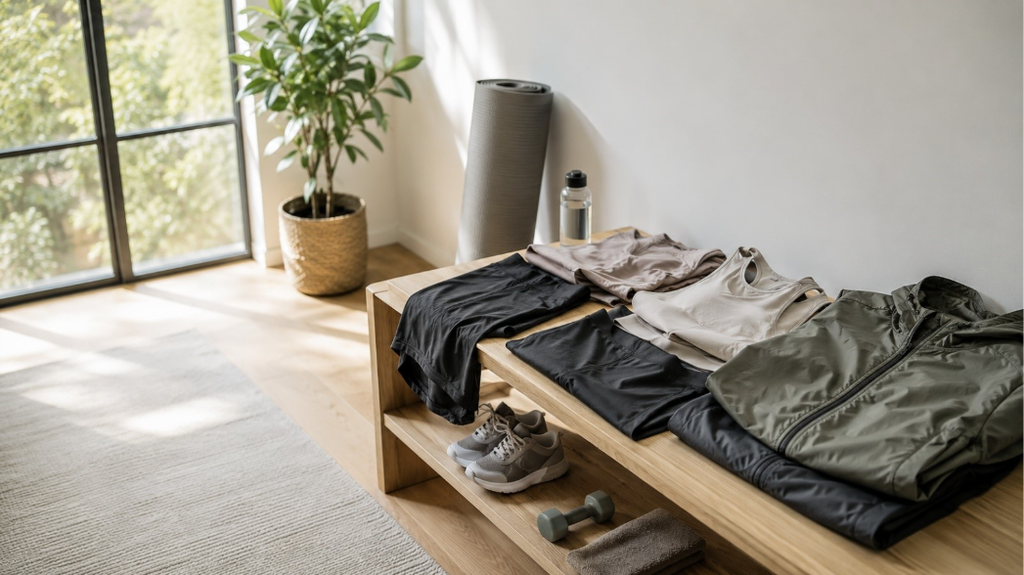
A small collection of versatile pieces can cover several types of exercise.
For example, you might have a few comfortable tops, a couple of pairs of suitable bottoms, appropriate socks and footwear for your main activities.
If you regularly participate in different forms of exercise, choose pieces that can work across several activities. Longer tops, loose-fitting trousers and lightweight layers can also be combined in different ways when additional coverage is preferred.
Choosing the right fitness clothing can make workouts feel more comfortable and practical. Looking at different sportswear styles can help when deciding what suits your routine, preferred activities, personal style and coverage preferences.
The important thing is to choose clothing based on the activities you actually do rather than buying equipment simply because it is marketed as essential.
Consider the Weather Before You Leave
One of the simplest mistakes is dressing for the weather when you leave the house rather than the conditions you’ll experience during exercise.
Your body generates heat as you become active, so an outfit that feels cold before you start may become comfortable after several minutes of movement.
For outdoor activities, check the forecast and consider how long you’ll be exercising.
A longer session may require more thought than a short walk around the neighbourhood.
Comfort Can Help You Focus on Exercise
The psychological side of exercise shouldn’t be overlooked.
When your clothing is comfortable and stays where it should, you have one less thing to think about.
You can focus on your breathing during a run, your technique during strength training or maintaining your pace during a cycling session instead of constantly adjusting your clothes.
That doesn’t mean particular clothing will automatically make you fitter or dramatically improve your performance. It simply removes an avoidable source of discomfort.
And sometimes small improvements in comfort are enough to make exercise feel more enjoyable.
Dress for the Exercise You Actually Enjoy
There is no universal “best” workout outfit.
The ideal clothing depends on the activity, environment, personal preferences and the way your body responds to exercise.
If you run, prioritise comfortable movement and clothing suitable for the weather. If you lift weights, look for freedom of movement. If you cycle, choose comfortable clothing that allows you to move freely. If you walk, focus on comfort and appropriate footwear.
If modest coverage is important to you, choose options that meet those requirements while still allowing you to exercise comfortably and safely.
Most importantly, don’t let the idea of having the perfect workout wardrobe become a barrier to getting started.
You can begin with what you already have, identify what works and gradually make changes as necessary.
The best workout clothing isn’t necessarily the most expensive or fashionable option. It’s the clothing that allows you to move comfortably, concentrate on what you’re doing and finish your session feeling good about being active.